
Deriv Go App Guide: Features & Setup for Nigeria
Boom and Crash Trading Strategy for Deriv Nigeria
Boom and Crash indices move in a way that feels almost designed to punish impatience. Prices drift for minutes, then a single candle rips through your stop before you can react. This guide breaks down a practical spike-detection and entry framework for Nigerian traders using deriv, with rules you can test on a demo account before risking real money.
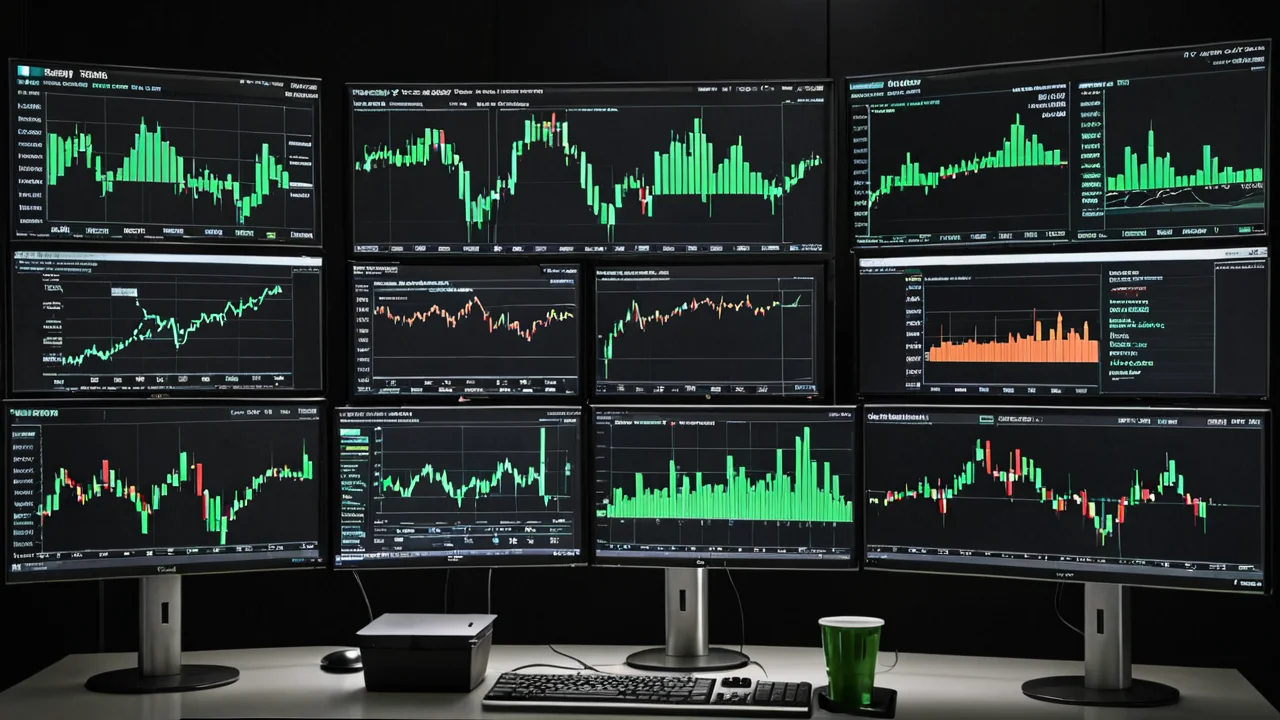

What Boom and Crash Indices Actually Are
Boom and Crash are synthetic indices built by Deriv, not tied to any real currency, stock or commodity. Their price feed is generated by an algorithm, which means they trade 24/7, including weekends and Nigerian public holidays. That is a big part of the appeal for traders in Lagos, Abuja and Port Harcourt who want to trade outside normal forex market hours.
The core mechanic is simple to describe but hard to master. Boom indices produce mostly small downward candles with occasional sharp upward spikes. Crash indices do the opposite: steady upward drift interrupted by sudden downward spikes. The spike is where the money is, and it is also where most accounts get wiped out.
You are not predicting direction in the traditional sense. You are positioning for a spike that will happen eventually, but at a time you cannot know in advance. That single idea changes how you size positions, where you place stops, and how long you hold.
- Boom 1000 spikes roughly once every 1000 ticks on average, Crash 500 roughly once every 500 ticks
- Spikes are violent and can cover a large distance in a single candle
- tradeween spikes, price movement is slow and range-bound, which tempts overtrading
- Synthetic indices are available on Deriv's proprietary platforms and on MetaTrader 5
Key Takeaway: Boom and Crash reward patience and punish over-leverage. The spike is inevitable, but the timing is random, so your job is survival until it arrives.
If you want the wider picture of how these instruments fit alongside other synthetic products, see our guide to synthetic-indices.
Ready to try Stockity?
UPI, cards, crypto — pick your method.
How to Trade Boom 1000 on Deriv
Boom 1000 is the slower of the two Boom variants. Because the average spike interval is longer, price spends more time grinding lower, and the eventual spike tends to be larger relative to the drift. Beginners often prefer it because there is more time to think.
The standard approach is a buy-only bias. You wait for a pullback or a period of consolidation, enter long, and hold for the spike. Sounds easy. The problem is that if you enter too early and use a tight stop, the slow bleed will take you out before the spike ever comes.
Position sizing matters more than entry timing on Boom 1000. If your lot size is too large, a normal drift will hit your stop loss. If it is too small, the spike will not pay enough to justify the wait.
A workable beginner framework looks like this:
- Use a small fixed lot size, ideally the minimum your account allows
- Set a stop loss wide enough to survive normal drift, not just a few pips
- Take profit at a fixed target rather than trying to catch the top of the spike
- Avoid adding to a losing position while waiting for the spike
Many Nigerian traders run Boom 1000 on the 1-minute chart for entries and the 5-minute chart for context. The shorter timeframe shows the spike clearly, the longer one shows whether price is in a drift phase or already extended.
Key Takeaway: On Boom 1000, the trade is a waiting game. Enter small, set a realistic stop, and let the algorithm do the work.
Open an account in minutes
No KYC delays — start trading the same day.
Crash 500 Spike Strategy for Nigerian Traders
Crash 500 is the mirror image of Boom. Price drifts upward in small steps, then a downward spike erases a chunk of that gain in seconds. The bias here is sell-only.
The trap is identical but reversed. Traders short too early, watch price grind higher against them, and get stopped out just before the spike they were waiting for. Crash 500 spikes more frequently than Boom 1000, which means more opportunities but also more chances to overtrade.
A structured Crash 500 approach for Nigerian traders:
- Wait for price to reach a recent range high before considering a short
- Enter with a small position and a stop above the range, not right at your entry
- Target a fixed number of points rather than the full spike
- Close the trade if the spike does not arrive within your planned holding window
The most common mistake is revenge trading after a missed spike. You see a huge candle you did not catch, you enter immediately, and the next drift phase stops you out. Missing a spike costs nothing. Chasing one costs real money.
If you are still building screen time, run this exact setup on a deriv-demo-account-practice-trading-nigeria before going live. Spike behaviour is easier to internalise when you are not watching your balance.
Refine your strategy on demo
Same charts as live trading, no real money.
Reading Spike Behaviour Without Indicators
Most indicators lag on synthetic indices because the price action is algorithmic, not sentiment-driven. Moving averages, RSI and MACD will give you signals, but those signals often arrive after the drift has already reversed.
What actually helps is reading the rhythm of the chart. Boom and Crash have a recognisable texture: long stretches of small candles, then a single outsized one. Once you can see that texture, you stop reacting to every candle and start waiting for the anomaly.
Things worth watching:
- Candle body size relative to recent candles, a sudden expansion often precedes volatility
- Time spent in a tight range, longer compression can mean a larger spike when it breaks
- Distance from your entry, if price has drifted far against you, your stop is probably too tight
- Session timing, though synthetic indices run 24/7, your own focus and reaction speed vary
Do not try to predict the exact tick of the spike. No indicator, no bot and no signal group can do this reliably. Anyone claiming otherwise is selling something. Your edge comes from surviving the drift and being positioned when the spike lands.
Key Takeaway: Trade the structure, not the noise. Compression, expansion and patience beat indicator stacking on synthetic indices.
For a deeper look at how these instruments compare with volatility indices, read deriv-synthetic-indices-volatility-trading-nigeria.
Trade on integrated tools
Audited indicators, real-time data feed.
Risk Management Rules That Keep Nigerian Accounts Alive
Leverage on synthetic indices can be high, and that is exactly why risk control matters more here than on forex pairs. A single oversized position can erase weeks of small gains in one spike against you.
Rules that experienced traders tend to follow:
- Risk no more than 1 to 2 percent of account balance per trade
- Never hold multiple Boom or Crash positions in the same direction at once
- Set a daily loss limit and stop trading when you hit it
- Withdraw profits regularly rather than compounding everything
The goal is not to win every trade. The goal is to still have an account when the spike you planned for finally arrives. Traders who blow up on Boom and Crash almost always do so through position size, not through bad analysis.
Funding is straightforward for Nigerian users. Deriv supports multiple electronic payment methods with structured deposit and withdrawal limits per method, and the minimum deposit for Nigerian traders is commonly described as around USD 5 to 10, which keeps the entry barrier low. Low entry cost does not mean low risk, though. Start with the smallest size that lets you test your rules properly.
Common Mistakes Beginners Make on Boom and Crash
Almost every blown account on these indices follows one of a handful of patterns. Recognising them early saves money.
- Trading both Boom and Crash at the same time and cancelling out the edge
- Using martingale or doubling down after a loss
- Setting stop losses so tight that normal drift triggers them
- Holding a losing position for hours hoping the spike will rescue it
- Following signal groups that promise exact spike timing
- Switching strategy after two or three losing trades
The last one is subtle but damaging. A strategy needs a sample size before you can judge it. Ten trades tells you almost nothing. Fifty trades with consistent rules tells you whether the approach has any merit.
Key Takeaway: Consistency beats cleverness. Pick one index, one timeframe and one set of rules, then measure results over a meaningful number of trades.
Building a Simple Daily Routine
A repeatable routine removes emotion from the process. Nigerian traders juggling work or study often trade in the evening, which is fine because synthetic indices never close.
A basic routine:
- Check your account balance and decide your maximum risk for the day
- Open the chart, identify whether price is in drift or extended
- Wait for your setup, do not force a trade
- Enter small, set stop and target before you click buy or sell
- Log the trade and close the platform when you hit your limit
That last step is the one most people skip. Closing the platform is a risk-management tool. If you are still watching candles after you have hit your daily target or your daily loss, you are trading, not trading.
When you are ready to move from practice to live trading and start with the minimum position size until your rules feel automatic.
Frequently Asked Questions
-
What is the best timeframe for Boom and Crash trading on Deriv?
A: Most beginners use the 1-minute chart for entries and the 5-minute chart for context. Shorter timeframes show spikes clearly but produce more noise, while longer timeframes smooth out the drift and make spike timing less obvious.
-
Can I trade Boom 1000 and Crash 500 at the same time?
A: You can, but it usually cancels out your edge. Boom is a buy-bias instrument and Crash is a sell-bias instrument, so running both simultaneously often means one position works against the other. Pick one and focus.
-
Is there a strategy that predicts the exact spike?
A: No. The spike timing is generated by an algorithm and is not predictable tick by tick. Any signal service claiming exact spike prediction should be treated with suspicion. The realistic approach is positioning for the spike and surviving the drift.
-
What is the minimum deposit for Nigerian traders on Deriv?
A: Nigeria-focused reviews commonly describe the minimum deposit as around USD 5 to 10, which makes it a low-entry broker. Deposit and withdrawal limits vary by payment method, so check the official payment methods page for current ranges.
-
Is Deriv regulated for Nigerian clients?
A: Deriv serves Nigerian clients through offshore entities rather than a Nigerian domestic licence. Review and regulatory-watch sites classify these entities as tier-3 or offshore, which means weaker investor-compensation protections than top-tier regulated brokers. Understand this structure before funding an account.
-
How much should I risk per Boom or Crash trade?
A: A common guideline is 1 to 2 percent of your account balance per trade. Given how violent the spikes can be, staying at the lower end of that range is sensible while you are still learning how the indices behave.